What is a PIV unit and is it worth it?
If somebody has told you that you need a PIV unit and you're not sure what you're agreeing to, this one's for you. It's a small box that sits in your loft and gently pushes filtered fresh air down through the house. It sounds too simple to do anything, and it's often the thing that finally stops mould coming back.
A PIV unit is a small filtered fan fitted in your loft that gently pushes fresh air down through the house, so damp air is pushed out instead of settling on cold walls. It runs for pennies and it's worth it where condensation keeps coming back. It won't fix a leak or failed damp proofing.
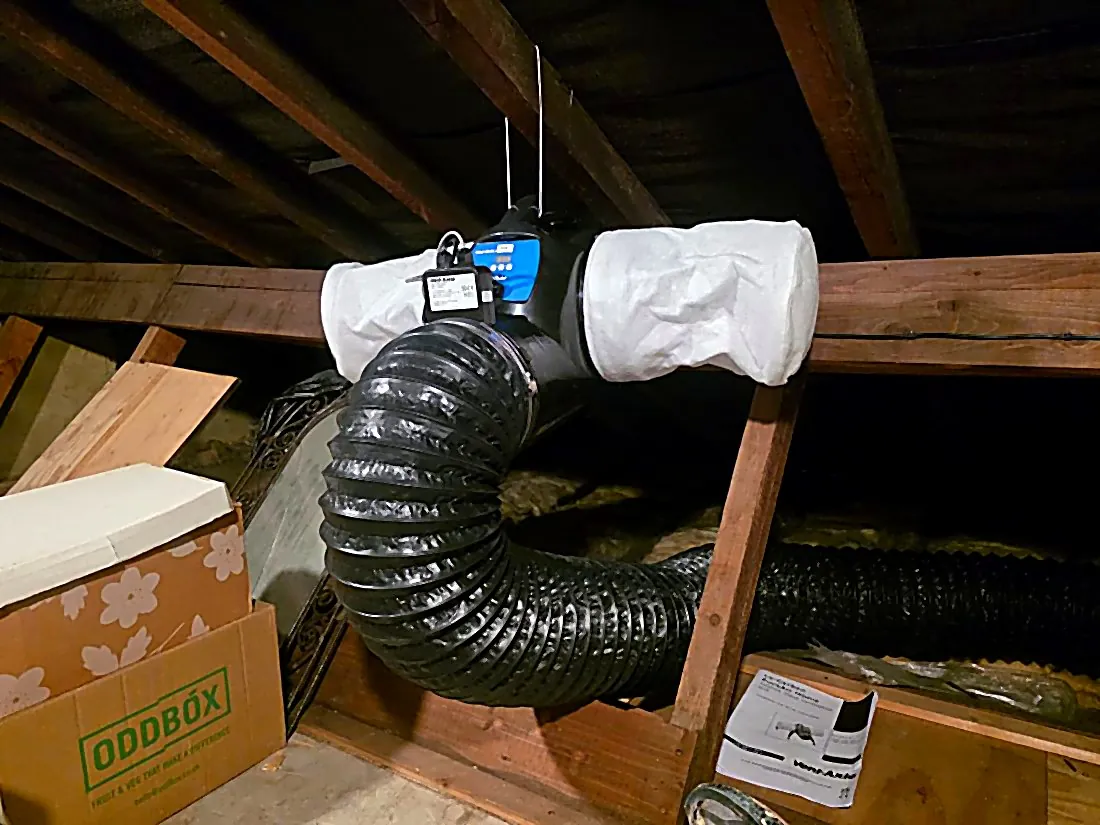
What a PIV unit actually does, in plain terms
Think about why a house goes damp. You make moisture all day long. Showers, cooking, washing, the kettle, breathing. In a modern sealed-up house it's got nowhere to go, so it hangs about until it finds a cold wall. A PIV unit deals with that by putting the house under a very slight positive pressure. It feeds clean filtered air in through a vent, usually in the landing ceiling, and that gently pushes the stale damp air out through gaps and vents. Air keeps moving, moisture leaves, and mould loses one of the three things it needs.
What does a PIV unit cost to run?
This is the first question everybody asks, and the answer is pennies. It draws less power than a light bulb left on. It ticks over on a low setting all the time and steps itself up when the humidity in the house climbs, which is normally after showers and while you're cooking. It isn't a heater and it isn't a dehumidifier, so there's no tank to empty, nothing to remember and no switch to keep flicking. You have it fitted and then you largely forget about it.
Will I hear it, and will it make the house cold?
You'll hear a faint hum if it's working hard and nothing at all most of the time. It's up in the loft, not in a room, and the vent in the ceiling is about the size of a smoke alarm. On the cold question, the air comes in through the loft, which sits warmer than outside, and a decent unit tempers it on the way down. In practice most people tell us they noticed the windows had stopped streaming long before they noticed anything about the temperature.
When a PIV unit is not the answer
A PIV unit manages moisture in the air. It does nothing whatsoever about water coming in from outside. If a gutter is running down your wall, the roof is letting water in or the damp course has failed, a PIV won't touch it and we're not going to sell you one. That gets fixed first. Same goes if your bathroom extractor is dead, or it's the original one from when the bathroom was fitted and it couldn't pull the skin off a rice pudding. Sometimes an extractor fan replacement is all you genuinely need.
What happens if the air never gets sorted?
You end up paying for the same wall over and over, and living with the thing in between. NHS guidance links damp and mould with respiratory issues, asthma attacks, wheezing, coughing and infections, and says the risk is higher for babies, children, older people and anyone with asthma, eczema or a weakened immune system. That's a real reason to deal with a bedroom that goes black every winter, and if anyone at home is unwell it's worth seeing your GP too. There's a building cost as well. Air that damp doesn't only mark the paint. Given a few years it softens plaster, lifts wallpaper, rots skirtings and gets into window frames, and that's when a cheap job stops being cheap.
Why the five year guarantee needs one, and what fitting involves
We work at three levels and the guarantees run one year, three years and up to five. The five year one needs a PIV unit fitted, and that isn't a sales trick. It's because we can only stand behind mould staying gone for that long if we know the ventilation is handled and it isn't relying on somebody remembering to open a window every morning. If you don't want one, that's genuinely fine, you get the shorter guarantee instead. Fitting is normally about half a day. We get up in the loft, mount the unit, cut the vent into the landing ceiling, run it to a fused spur and commission it. There's a bit of dust and we clear up after ourselves. Nothing gets chased into your walls and nobody takes your ceiling down.
Common questions
How quickly will I notice a difference?
The windows are usually the first thing. Plenty of people tell us the morning condensation has gone or nearly gone inside a week or two. The mould itself doesn't vanish on its own, that still needs killing and cleaning off properly, but once the air is moving it stops coming back. That's the part that actually matters.
I haven't got a loft. Can I still have one?
There are flat versions made for flats and houses with no usable loft, normally fitted into a hallway ceiling or onto a wall. Whether it suits your place comes down to the layout, so it's one we'd want to see before we said yes. We're out across Walton-on-Thames and Elmbridge most days. If it won't work there, we'd be looking at extractors and opening up air paths instead.
Will it get rid of the mould I've already got?
No, and be wary of anybody who tells you it will. It removes the conditions that grew it. The growth you can see still needs killing, cleaning off and the surface treating, and if it's spread through the room we'd fog it as well. The PIV is what stops it coming back afterwards, not what clears it.