Why does mould keep coming back, and what kills it permanently?
If you've wiped the same black patch off the same wall three times since Christmas, we want to save you a fourth. The cleaning isn't the issue. The issue is that mould is a symptom, and whatever's causing it is still sat there behind the paint.
Mould keeps coming back because cleaning removes the growth, not the moisture feeding it. To kill mould permanently you have to fix the damp first, whether that's a leak, a cold wall or air with nowhere to go. Then treat the surface properly and ventilate with a working extractor or a PIV unit.
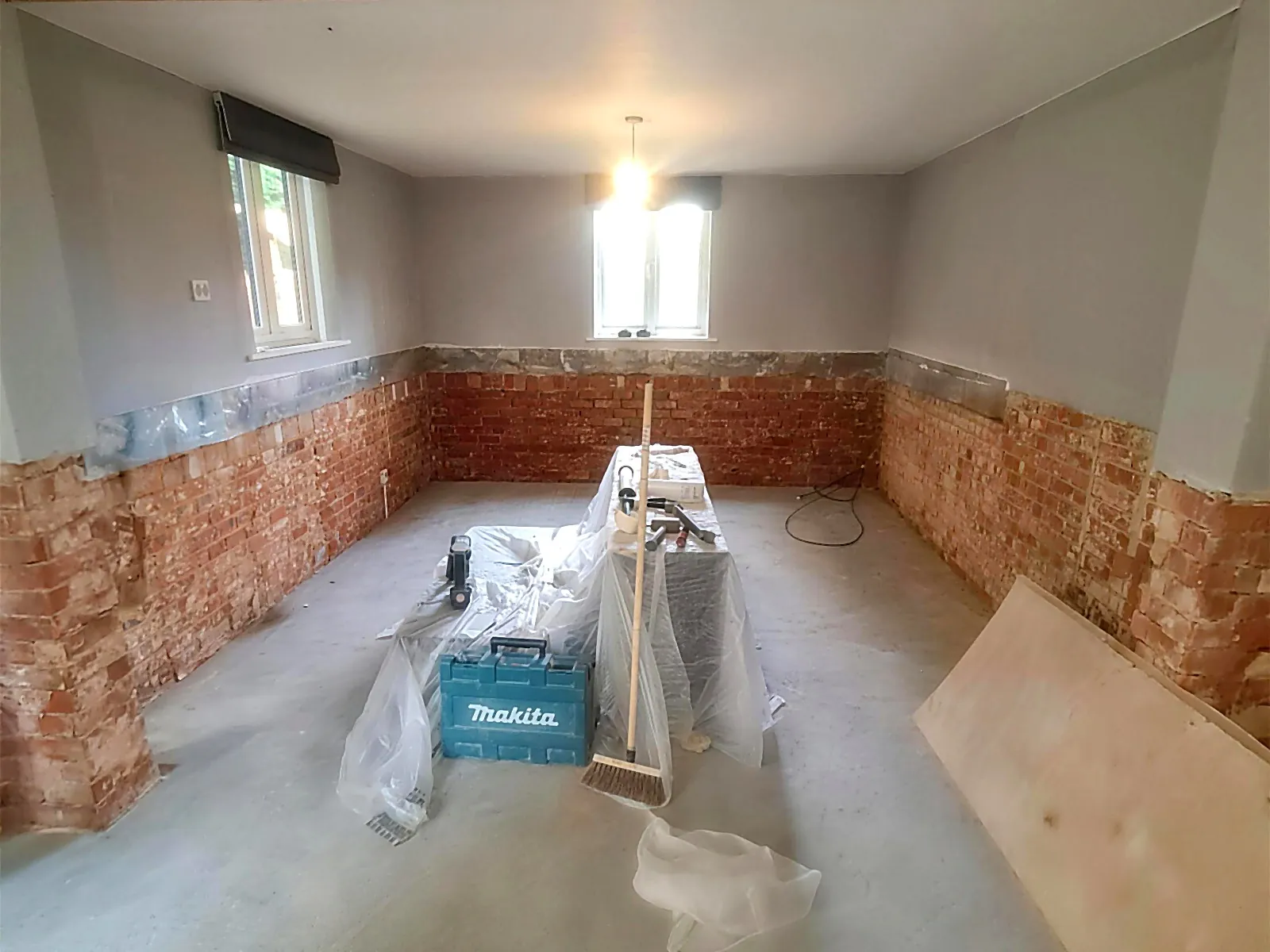
You're cleaning the symptom, not the cause
Mould needs three things to grow. Moisture, something to feed on, and a surface cold enough for water to settle on it. When you clean a wall you take away the black. You don't take away the damp air and you don't warm the wall up, so the spores still sat in the plaster get exactly what they had before. A few weeks later you're back where you started. That's also why it always returns to the same corner rather than turning up somewhere new. The corner hasn't changed. It's why we don't go straight at the mould when we walk in. We look at the outside wall, the window reveals, the corner behind the wardrobe and the ceiling above the shower, because the pattern on the wall tells us the story before the meter is out of the bag.
Does bleach kill black mould on a wall?
No, and this is the one that costs people the most time. Household bleach is mostly water. On a painted wall it knocks the colour out of the growth, so it looks like it's gone. On porous plaster it soaks straight in and leaves the wall wetter than it was before you started. We've been in houses where somebody has bleached the same patch every month for two years and genuinely believes they're keeping on top of it. They're feeding it. If you're going to clean it yourself, use a proper anti-mould product, follow the instructions on it, and don't soak the wall.
Round here it's nearly always condensation
We cover Hersham, Walton-on-Thames, Esher, Weybridge and Cobham, and most of what we see across Elmbridge is condensation rather than a leak. Warm wet air from showers, cooking and drying washing on the radiator goes looking for the coldest surface in the house and turns back into water on it. In the older solid-brick Victorian and 1930s places the outside walls are properly cold, so that's where it lands. In the new builds it's the opposite issue. The house is sealed so tight that the moisture you make all day has nowhere at all to go.
What kills mould permanently in a house?
Three steps, in this order, and the order is the whole thing. Kill and remove what's growing, properly, not just wipe it over. Then deal with the moisture, which usually means an extractor that actually shifts air, or a PIV unit in the loft keeping air moving through the house. Then make the wall good and finish it in an anti-mould paint. Skip the middle step and you've bought yourself a nice looking wall for one winter. That's the step people leave out, and it's the only one that decides whether we're standing in your bedroom again next October.
What happens if you just keep wiping it off?
Two things, and neither of them is cosmetic. The NHS is clear that damp and mould are linked to respiratory issues, asthma attacks, wheezing, coughing and infections, and that the risk is higher for babies, children, older people and anyone with asthma, eczema or a weakened immune system. If somebody in your house coughs from October to March, speak to your GP as well as ringing us. The second thing is the building. Damp that sits in a wall year after year rots skirtings, softens plaster and works into joists and window frames. The patch that was a day's work in October turns into plaster off, a damp-proof course and re-rendering by the third winter. Same wall, very different bill.
Sometimes it really is just a clean
We'll be straight with you, because it saves everyone a trip. If it's a bit of black on the silicone round the bath and your fan is working, you don't need us. Get a mould remover, do the seal, run the fan during the shower and for a while after, and keep the door shut while you're in there. If it comes back inside a month, or it's on the wall rather than the sealant, or it's in a bedroom where somebody sleeps, that's a different conversation and it's worth a look.
Common questions
Can I just paint over it?
No. Anti-mould paint is good stuff, but it's made to go onto a surface that's already been treated and is dry. Put it over live mould and it will come through, usually inside a couple of months, and then you've paid for paint and still got mould. Treat it, sort the cause, then paint. In that order.
What kills black mould on a wall?
A proper anti-mould treatment on a surface that's been physically cleaned first, then an anti-mould paint over the top. Not bleach, not washing-up liquid, not vinegar. And none of it lasts if the wall is still cold and the air is still damp. The treatment kills what's there. The ventilation is what keeps it dead.
How long before it comes back if I leave it?
Through winter, usually weeks rather than months. Condensation mould is seasonal, so it often looks like it's cleared up by itself in May and then reappears in the same corner in October. That isn't it getting better. That's just the weather changing. The conditions come back and so does the mould.