Is it safe to sleep in a room with black mould?
It's normally late at night when this one comes through. A photo of a bedroom corner, and a message asking whether it's safe for a child to sleep in there. Here's the straight answer, and then the things we'd do before bed.
We wouldn't sleep in it if we had a choice, and we wouldn't put a baby or anyone with asthma in there at all. For a healthy adult, a night or two won't do lasting harm. It's living with it for months that causes trouble. Move the bed off the wall, ventilate, and get the cause found.
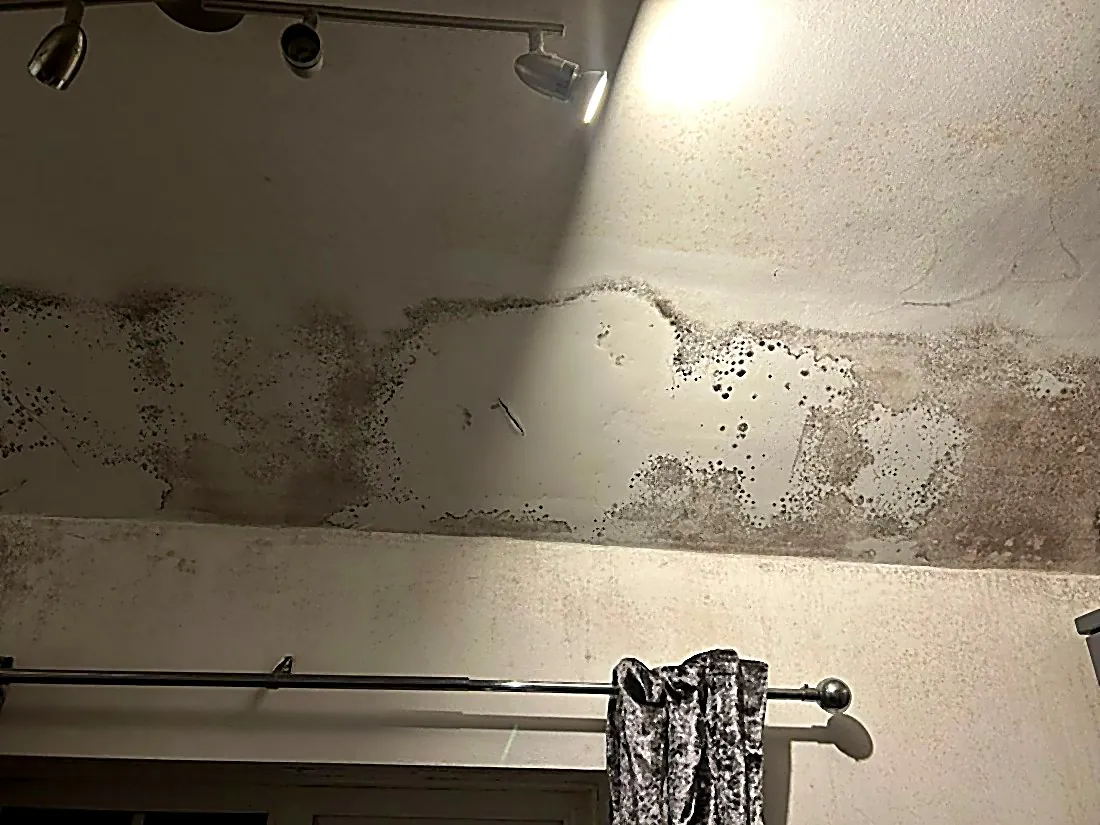
Is it harmful to breathe in black mould?
Breathing it in day after day isn't good for you, and the NHS is clear enough about it. Damp and mould are linked with respiratory issues, wheezing, coughing, chest infections and asthma attacks. The pattern people describe to us is a cough or a blocked nose that hangs about all winter and clears up the week they go away. Babies, young children, older people and anyone with asthma or a weakened immune system feel it more. That isn't us trying to frighten you into booking work. It's why we'd move a cot out of a mouldy room without thinking twice about it.
Who we'd move out of that room tonight
If there's a baby in there, move them. If somebody in that room has asthma, a chest condition or is on treatment that's knocked their immune system about, move them too, even if it means the sofa for a couple of nights. Older people the same. For a healthy adult, one night in a room with a patch on the ceiling is not going to do you damage, and we'd rather say that plainly than have you lying awake at midnight worrying. It's months and years of it that do the harm, not tonight. Just don't let tonight quietly turn into all winter.
What to do before you go to bed
Pull the bed away from the wall, at least a hand's width and more if the room allows it. Sleeping with your face a few inches from it for eight hours is the worst version of this. Open the window a crack even in winter, and open the trickle vents in the frame if they've been painted shut. Keep the bedroom door shut so you're not pushing damp air round the rest of the house. Get any drying washing out of there. If there are spare pillows or a duvet stored against that wall, move them out too. None of it fixes anything, but it buys you a better night.
Don't scrub it dry, and go easy with the bleach
The instinct at eleven at night is to attack it with a cloth. Try not to. Dry scrubbing or brushing at it puts a cloud of spores into the air of the room you're about to sleep in, which is exactly the opposite of what you want. If you're going to clean it, use a proper anti-mould product, spray it and let it sit rather than rubbing away at it, wipe it gently with a disposable cloth and bin the cloth afterwards. Open the window while you're doing it. Household bleach on plaster is mostly water, and it leaves the wall wetter than it was.
Can I stay in a house with black mould?
In nearly every house we walk into, yes. People picture masks and moving out for a fortnight, and that's very rarely what this is. A patch on a bedroom ceiling or in the corner of an outside wall is an issue to sort out, not a reason to pack a bag. Where we'd think harder is if it has spread across several rooms, if it's been there for years rather than weeks, or if somebody in the house has a serious breathing condition and is noticeably worse at home than away from it. That's a conversation with your GP as much as one with us.
Why it turned up in a bedroom in the first place
Bedrooms are where we find most of it and there's a reason for that. You're in there for eight hours breathing moisture into a closed room, the heating is usually off overnight, and the outside wall behind the headboard is the coldest surface in the house. Add a wardrobe pushed flat against it and you've built the perfect spot. Across Hersham, Walton-on-Thames and Weybridge that's the bulk of what we see, condensation rather than a leak. So once everybody has had a decent night's sleep, get the cause found properly with a damp survey instead of cleaning the same patch every spring.
Common questions
How do I know if the mould is making us ill?
The usual story is a cough, a blocked nose or itchy eyes that hang around all winter and clear up on holiday. Damp and mould are linked with wheezing, chest infections and asthma flare-ups, and children and anyone with a breathing condition feel it first. We're damp surveyors, not doctors, so if somebody at home is unwell, see your GP and tell them there's mould in the house.
Is sleeping with the window open enough?
It helps and it's worth doing tonight. It won't fix it. One open window doesn't change how much moisture the whole house is making, and by two in the morning in January most people have shut it again. Treat it as first aid while you get somebody to look at the cause properly.
How quickly can you come and look at it?
We aim to be with you within 48 hours, and we're out most days across Elmbridge and the rest of Surrey. The number is 01372 271248 and we're on it every day, 8am to 8pm. If it's a child's bedroom or somebody in the house has asthma, say so when you ring and we'll work round it.