What kills black mould on walls permanently?
People ring up asking what kills black mould, and what they want is the name of a product. We'll give you one. But we'd be doing you no favours if we stopped there, because the spray only ever deals with what's on the wall. It does nothing about what put it there.
Nothing you spray kills mould permanently. A proper anti-mould treatment kills what's growing on the wall today, but the moisture that fed it is still there, so it grows back. Permanent means fixing the cause first, whether that's a leak, a failed damp course or condensation, and then treating the surface.
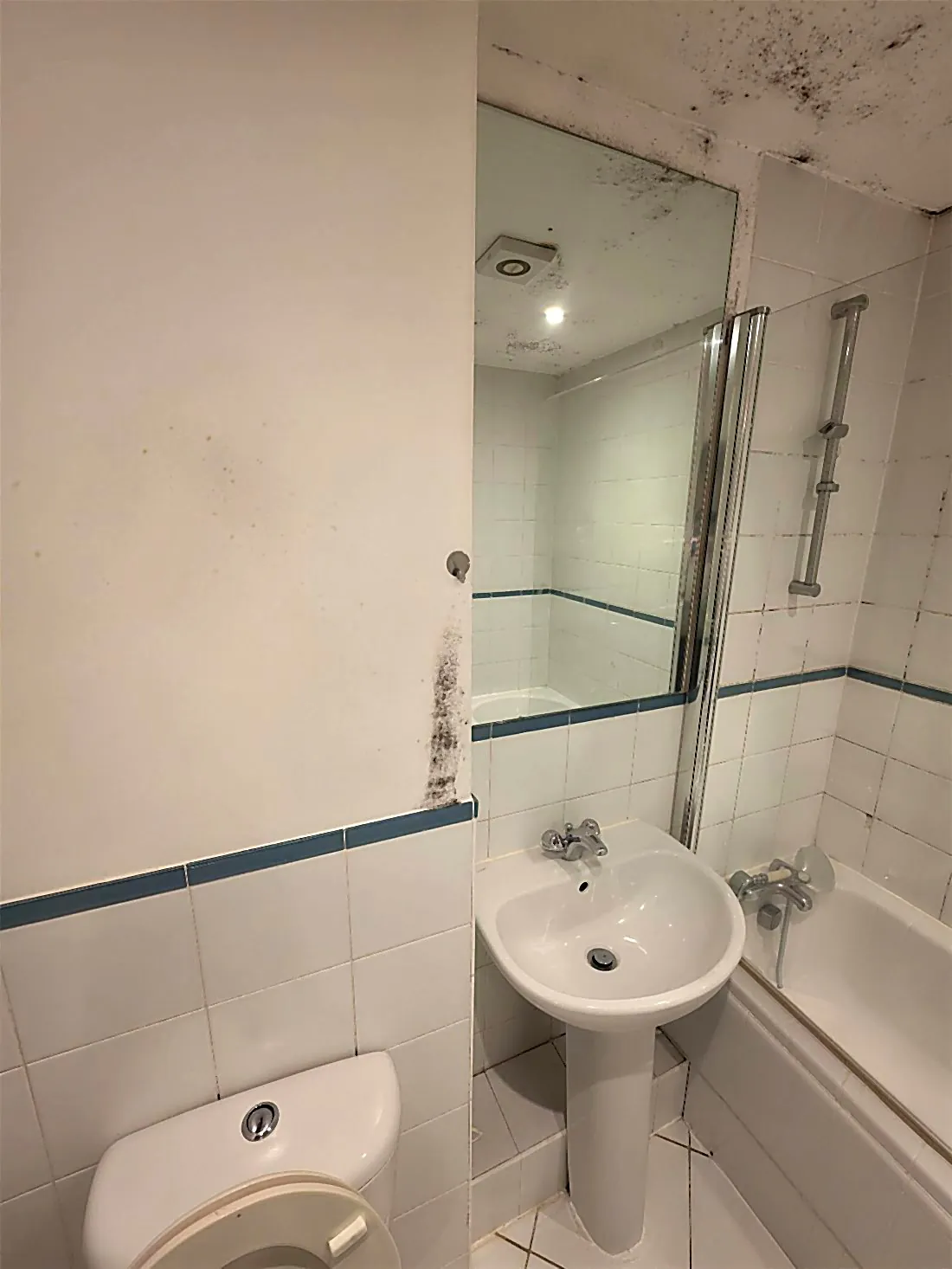
What kills black mould on a wall?
On the surface, a proper anti-mould or fungicidal wash. Any decent trade merchant or hardware shop has one. Spray it on, leave it for as long as the tin tells you, then wipe it off with a disposable cloth and bin the cloth. Don't rub at it dry first, because that throws spores round the room. Don't soak the wall either. That's genuinely it for the surface, and done properly it works. What it doesn't do is stop the same patch reappearing in October, because the wall behind it is still cold and the air in that room is still wet.
Why bleach is the wrong tool on plaster
Household bleach is mostly water. On a painted or plastered wall it knocks the black colour out of the growth so it looks like it's gone, and it soaks straight into the plaster and leaves that wall wetter than it was before you started. You've bleached the stain and fed the cause in the same afternoon. On tiles, glass and the silicone round a bath it's a different story, because none of those absorb anything, so bleach there is fair enough. Anywhere porous, use a product made for the job. We've been in houses where the same patch has been bleached monthly for two years.
What permanent actually means
Mould needs three things. Moisture, something to feed on, and a surface cold enough for water to settle on it. You can't strip the food out of a house, because that's your plaster, your paint, your wallpaper paste and the dust on top of the skirting. You can't remove every spore either, they're in the air everywhere, including outside. So there's exactly one of the three you can take away, and that's the moisture. Every permanent job we do comes back to that. Find where the water is coming from, stop it, then treat the surface and finish it. In that order, every time.
What kills mould permanently in a house?
Whatever is making the room wet. Sometimes that's a leak, a shot gutter running down an outside wall or a failed damp course, and that's building work. Far more often round Esher, Cobham and Walton-on-Thames it's condensation, which means the moisture you make every day has nowhere to go. Then the answer is air. An extractor that actually shifts air rather than humming to itself, trickle vents opened up, furniture pulled off the cold wall, or a PIV unit in the loft keeping air moving through the house. Sort that and the treated wall stays clean. Skip it and no product will stop it returning.
The jobs we'd tell you to do yourself
Plenty of this doesn't need us and we'd rather say so than take the booking. Black along the silicone round the bath, with a fan that works, is a tube of mould remover and half an hour of your Saturday. Same for a bit on a window reveal you've been wiping since November. Clear your gutters and check the downpipes at the back while you're up there, because we've cured more so-called rising damp with a ladder than with anything injected into a wall. Pull the wardrobe a few centimetres off the outside wall. If it stays gone, you never needed a damp specialist.
When another spray is money down the drain
There's a point where cleaning it again is just buying yourself a winter. If the plaster has blown and crumbles when you press it, if there's a chalky white bloom coming through the paint, if there's a tide mark above the skirting, or if you've treated the same wall three years running, that wall is holding water. That's a damp survey, and usually hacking back to brick, a damp-proof course, re-rendering and re-plastering. Face it early. Damp left alone rots skirtings, window frames and eventually joists, and a job that was hundreds of pounds becomes one that runs into thousands.
Common questions
Does vinegar or washing-up liquid work?
On a small patch of something non-porous, glass, tile or silicone, white vinegar will knock it back and we're not going to tell you to pour it away. On plaster or a painted wall it's weak and you end up wetting the wall. And like every other spray it only treats today's growth. Nothing in the kitchen cupboard changes why that wall is cold and damp.
Can I just paint over it with anti-mould paint?
Not over live mould. Anti-mould paint is decent stuff, but it's made to go onto a surface that's already been treated and is dry. Put it straight over growth and it comes through, usually within a couple of months, and you've paid for paint and still got mould. Treat it, deal with the moisture, let it dry, then paint.
How long should treated mould stay gone?
We work at three levels with a one year, three year and up to five year guarantee, and the five year one needs a PIV unit fitted. That isn't a sales trick. It's the only honest way we can stand behind a wall staying clean that long, because we know the ventilation is handled rather than relying on somebody remembering to open a window. Ring 01372 271248 if you want it looked at.